
Residential Development Insight: Weatherhill Road, Smallfield

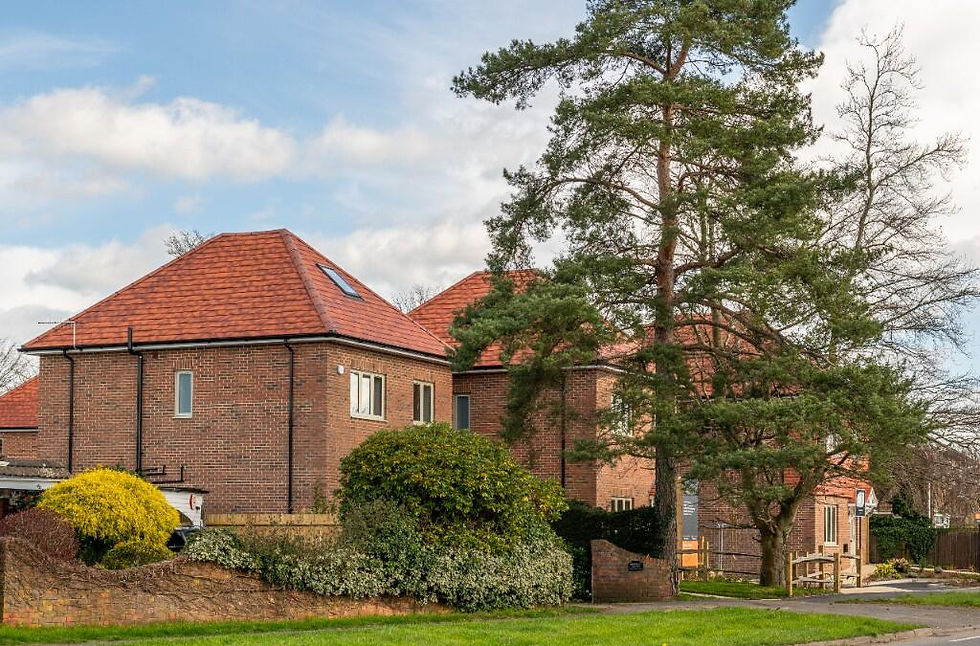
We are proud to have acted as the appointed consulting civil engineer for the residential development at Weatherhill Road, Smallfield. Our role encompassed the preparation of a comprehensive Surface Water Drainage Strategy and Flood Risk Assessment (FRA), supporting the delivery of a sustainable and policy-compliant scheme in a highly constrained setting.
From the outset, this project required extensive consultation and technical engagement. The site lies within a designated Critical Drainage Area, with the frontage previously identified as Flood Zone 3.
Despite these constraints, our SuDS strategy was successfully developed and accepted by the Lead Local Flood Authority (LLFA), demonstrating a robust and sustainable approach to surface water management.
A key challenge arose following a late-stage objection from the Environment Agency (EA), which classified part of the site as Flood Zone 3b (functional floodplain). This position was both unexpected and inconsistent with earlier consultations. Notably, neither the EA’s own modelled data (Product 4) nor our detailed FRA analysis indicated that the site falls within the 5% Annual Exceedance Probability (AEP) extent required to define Flood Zone 3b.
Our assessment clearly established:
The site is predominantly within Flood Zone 3a, based on accepted AEP definitions.
EA-provided node data confirms that the application site does not lie within the 1 in 20 (5% AEP) flood extent.
Historical and surrounding land use—characterised by established residential development—further supports that the site does not function as a floodplain in practice.
In response, we provided a clear and evidence-based rebuttal, highlighting inconsistencies in the EA’s position and reinforcing the validity of our technical approach. Importantly, all previous EA and LLFA comments had already been addressed within our updated FRA, including flood mitigation, drainage hierarchy compliance, and safe access/egress considerations.
This project demonstrates the importance of:
Data-led decision making in flood risk classification
Early and continuous stakeholder engagement
Designing resilient, policy-aligned SuDS solutions in sensitive environments
Alongside the flood risk assessment and drainage strategy, we also delivered a supporting Transport Statement, ensuring a coordinated and straightforward approach to site accessibility.
We remain committed to supporting sustainable residential development through rigorous engineering, clear communication, and practical solutions—even in the most challenging planning contexts.


Comments